

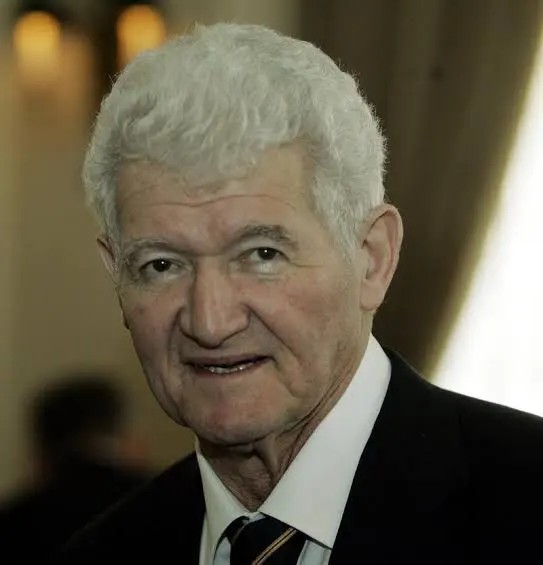
Rényi Institute is to hold a memorial colloquium on September 21 to mark the 100th anniversary of the birth of Peter D. Lax. Hungarian researchers will also present works connected to Lax’s legacy.
„The work of Peter D. Lax bridged pure and applied mathematics, abstract theory and computation reflecting a belief that the underlying math was universal. – wrote the New York Times in its orbituary in May 2025, stressing that Peter Lax’s legacy lives on not only in many areas of modern mathematics, but also in an approach that sees theoretical thinking and the understanding of real-world problems not as separate worlds, but as parts of the same science. The citation for the Abel Prize, awarded to him in 2005, likewise highlights that Lax “uniquely combined theoretical and applied mathematics, and found concepts that reorganized entire fields.” The distinctive character of his work lies not only in the many important theorems and methods he developed, but also in the way he built bridges between the abstract theory of mathematics and computational problems arising in the real world.
Bálint Tóth, a member of the Hungarian Academy of Sciences and research professor at Rényi Institute’s Department of Probability and Statistics, is organizing Rényi Institute’s colloquium commemorating Peter D. Lax. On September 21, 2026, the Institute’s Main Lecture Hall will also host presentations on the work of Hungarian researchers whose research is closely connected to Lax’s results. The program can be found HERE.
“The three talks are connected to Peter Lax’s scientific work and achievements. On the one hand, they build on theories and theorems that bear his name; on the other, they show how this work has continued to develop, while also giving the audience a glimpse, in a nutshell, of his broader legacy. My idea was to introduce the audience to Hungarian researchers whose work is connected to Lax’s research, and I invited the speakers with this in mind,” Tóth Bálint recalls when describing the planning of the event. Having met Professor Lax several times himself, he also preserves a number of personal memories of Peter Lax, who spoke Hungarian with literary elegance throughout his life.
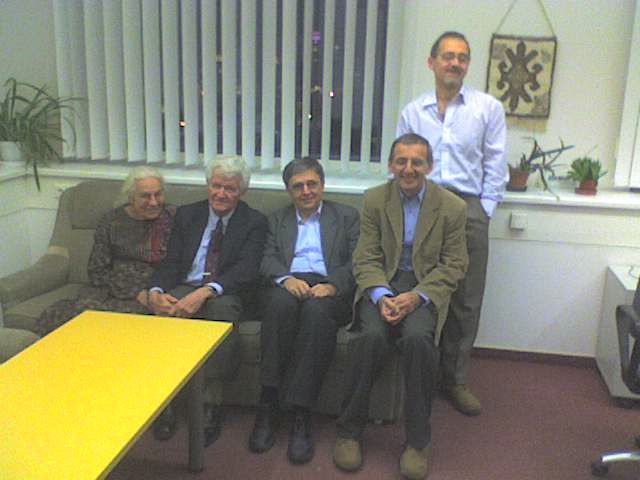
“His work had a personal impact on my life as well, and he was instrumental in fostering my attraction to Lax’s approach to mathematics. He was a warm and positive person, while at the same time we could see that he held strong opinions about the world around him. He was not only a brilliant researcher, but also a person of outstanding character who had a clear understanding of the transformative impact of his results on science and their practical value, yet he never boasted or showed off,” Tóth Bálint recalls. He first heard Lax give a plenary lecture in 1989 in Edinburgh, Scotland, where Lax had just been awarded an honorary doctorate. “He had a modest demeanor and never sought to draw attention to himself, even as he presented very deep mathematics,” Tóth continues. “And yet, you could sense the immense knowledge and intellectual power he possessed.” (From left to right in the photo: Peter Lax and his wife, László Lovász, István Faragó, and Bálint Tóth.)
Peter Lax was not only a brilliant researcher, but a true thinker. Our aim is to bring the audience closer to his research and to a deeper understanding of his work.”
Perhaps the best illustration of what makes Peter Lax’s legacy so remarkable is that his name is associated with multiple theories. The Lax–Milgram lemma (functional analysis), the Lax equivalence theorem (numerical methods for PDEs), the Lax–Friedrichs and Lax–Wendroff schemes (numerical methods for PDEs), the theory of Lax entropy solutions (the theory of hyperbolic conservation laws), Lax–Levermore theory (the small-dispersion limit of integrable systems), Lax pairs (integrable systems and soliton theory), and Lax–Phillips scattering theory (the scattering of waves by obstacles) are all still fundamental concepts and tools in different areas of mathematics today.
| Lax was both the creator of great mathematical theories and one of the foremost experts in the development of highly applicable methods, Bálint Tóth, research professor at the Probability and Statistics Department of Rényi Institute, emphasized in an interview on NPR Kossuth Radio. The package can be listened to HERE (in Hungarian). |
“There are not many mathematicians in Hungary who continue to work on Peter Lax’s topics,” Professor Bálint Tóth adds. “The kind of mathematics he pursued is still not sufficiently established here. This particular area of functional analysis still needs further development in Hungary, and this naturally also relates to Lax’s work on fluid dynamics. There is a strong tradition of functional analysis in Hungary that is not, or is less, connected to the world of partial differential equations (the legacy of Frigyes Riesz and Béla Szőkefalvi-Nagy. In physics, however, there is already research directly related to these topics, which is why I invited Professor Péter Forgács from the Wigner Research Centre for Physics. He is a mathematically oriented physicist, because this ‘branch’ of Lax’s work was also important in his career,” Tóth explains.
“One of the research areas where there is work being done in Hungary, for example, is functional analysis, including the Lax–Milgram theorem. Another important question concerns the hydrodynamic limit: how can we derive the large-scale, macroscopic differential equations describing the motion of fluids from the microscopic Newtonian laws governing the motion of individual particles? In other words, how does the multitude of tiny, random movements of individual particles give rise to the well-described behavior of an entire fluid? This is one of the major and difficult problems at the intersection of mathematics and physics.”
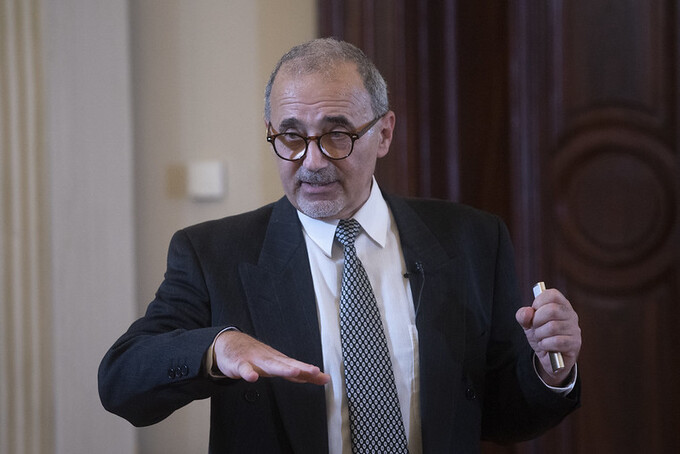
Bálint Tóth is a research professor at Rényi Alfréd Institute of Mathematics and an internationally recognized Hungarian researcher in probability theory. His main research areas include stochastic processes, random walks, and interacting particle systems. He studies mathematical models in which sequences of random events shape the behavior of a system. Professor Tóth holds a degree in physics and a doctoral degree in mathematics. As a professor at Rényi Institute, he is interested in the long-term behavior of systems in which many random events take place, particularly when what happens next is influenced by the past, the environment, or other particles. He studies what kinds of patterns and laws can emerge from randomness when a very large number of random events interact, and how the tiny, microscopic movements of countless individual particles give rise to the large-scale, orderly motion of an entire fluid. More broadly, his research asks how the physical laws describing the motion of individual particles lead to the macroscopic equations that describe the behavior of fluids and other many-particle systems.“The field of hydrodynamic limits is inconceivable without an understanding of Peter Lax’s hyperbolic conservation laws,” he says. |
In the second half of the 20th century, it became increasingly important for mathematics not only to describe natural phenomena, but also to make them computationally tractable. How does a wave propagate? What happens to a fluid when it flows at high speed? How can a shock wave be described? Tóth Bálint points out that, in addition to the results mentioned above, Peter Lax made numerous other important contributions, including methods for the numerical solution of partial differential equations, such as the Lax–Friedrichs method described above. These areas have continued to develop since the 1950s, although there have been no major contributions from Hungary. This type of mathematics is, however, closely connected to the work of László Székelyhidi Jr., a Hungarian-born researcher living in Germany, a leading researcher in turbulence and director of the Max Planck Society’s Institute for Mathematics in the Sciences in Leipzig, who has also been invited to speak at the colloquium.
The audience is also expected to include leading figures in the field, such as József Fritz, regarded in his time as one of the pioneers and key figures in the theory of hydrodynamic limits and one of Tóth Bálint’s mentors, as well as members of the Hungarian Academy of Sciences (MTA) and other members of the academic community from MTA’s Departments of Mathematical, Physical and Engineering Sciences.
“The work that József Fritz, my then-student Benedek Valkó, and I did in the early 2000s was closely connected to Peter Lax’s theory of entropy solutions, one particular strand of his scientific legacy,” professor Tóth says, referring to professor Lax’s immense professional and personal legacy and the exceptional breadth of his work. “He made outstanding contributions in many different areas. They all belong to functional analysis, but embedded in concrete problems. This, alongside his numerous results and awards, is what places him at the very pinnacle of mathematics as a profession.” (Benedek Valkó is now a professor at the University of Wisconsin Madison, ed.)
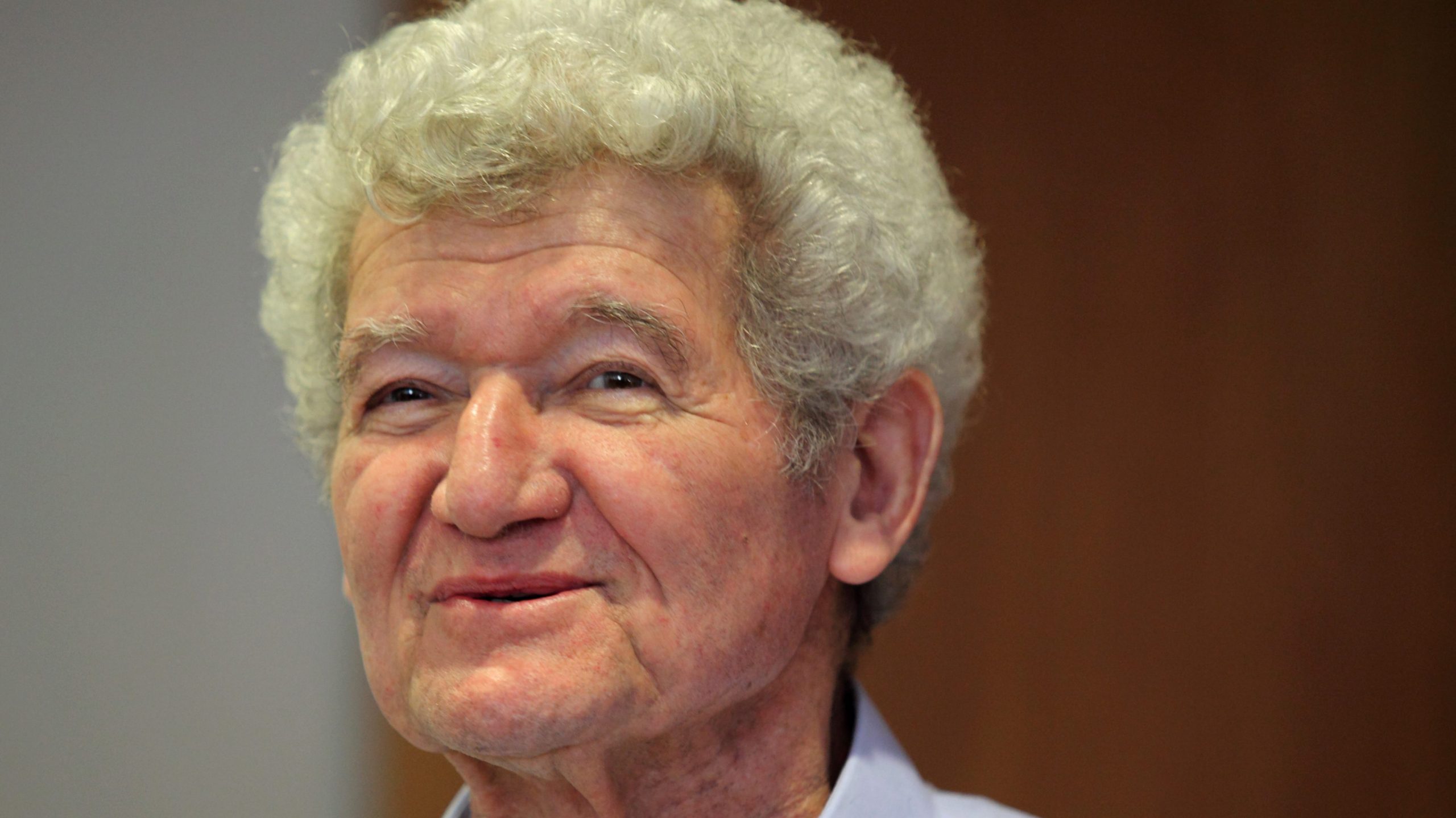
Tóth Bálint also points out that, early in his career, Peter Lax worked on combinatorics as well. Although he did not co-author a paper with Paul Erdős, Erdős built on a theorem of the young Lax in one of his publications and explicitly acknowledged it in the paper. (According to Lax’s own accounts, this would correspond to an Erdős number of approximately 1.5, ed.)
“Obviously, it also played a role that he came into contact with John von Neumann, who became his mentor. After the war, the numerical solution of partial differential equations was an enormous and extremely difficult task. Yet such methods were practically indispensable for aircraft design and for the development of the hydrogen bomb. Highly complex phenomena had to be described numerically. The young Peter Lax became involved in this work and went on to become a leading authority in the field of partial differential equations. This was highly relevant, applicable mathematics, and at the same time, ‘pure’ mathematics,” Tóth says, emphasizing that Lax’s work demonstrates that there is no real boundary between pure and applied mathematics. “This distinction is artificial,” he explains, adding that he and his colleagues put together the program of the memorial colloquium with great enthusiasm. He particularly highlights Balázs Maga, a research fellow at the Rényi Institute’s Analysis Department, whom he hopes will continue the Lax “line” of research in this area. (We previously wrote HERE about the young Rényi researcher’s views and advice concerning the mathematical capabilities of large language models.)
The American Mathematical Society, when awarding Lax the Steele Prize in 1992, described him as a major force in mathematics for four decades, whose influence had been “enormous.” According to the AMS, one of Lax’s greatest strengths was precisely his ability to connect pure and applied mathematics. He also supervised more than fifty PhD students, whose work, together with that of numerous other young mathematicians he influenced, multiplied his impact further. The Abel Prize Committee likewise emphasized that Lax had an extraordinary influence not only as a researcher, but also as a teacher, author, and mentor to younger mathematicians. He transformed the theoretical foundations of mathematics, methods of computational mathematics, and the way mathematicians approached problems arising in the physical world.
In light of all this, it should come as no surprise that Peter Lax also left plenty of challenges for future generations of mathematicians. As one of the most influential mathematicians of the 20th century, his name is associated with fields ranging from partial differential equations and functional analysis to numerical mathematics and numerous areas of mathematical physics. Asked to give an example of some of the open problems Lax left behind, Tóth Bálint points out that there is no general uniqueness theory for hyperbolic conservation laws and hydrodynamic-type equations. “This is precisely the problem addressed in László Székelyhidi Jr.’s lecture. The solutions of hydrodynamic-type equations are not necessarily unique; moreover, some mathematically valid solutions have no physical meaning. We therefore have to select, from among the many mathematically possible solutions, the one that describes the physically meaningful process. The entropy condition developed by Peter Lax helps us make this selection. But the uniqueness of these entropy solutions has not been fully established either. This is a huge area of problems that remains open to this day. On the other hand,” Tóth concludes, “there is a whole part of mathematics in which Lax’s decisive works and results turn up everywhere. So in a technical sense as well, his work is simply indispensable.”
Peter D. Lax’s legacy is far from complete. “The open problems left by Lax are just as exciting for mathematics as the open problems posed by Erdős. They are profound and important questions. Ultimately, according to his contemporaries and successors, his greatness lay in the connections he created between different worlds of mathematics. He showed that an abstract theory can give rise to a practical computational method, that a problem in physics can lead to a new mathematical structure, and that a well-chosen mathematical concept can become crucial decades later in entirely different fields. At Rényi Institute, we will remember him on September 21, 2026, not only as the author of numerous important results, but as a scientist who helped shape the way modern mathematics thinks."
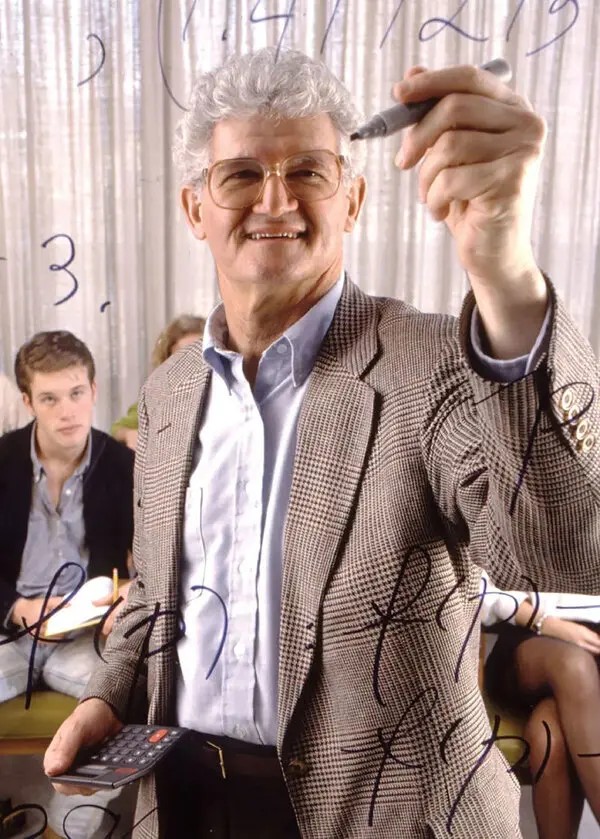
| Peter Lax’s legacy is considered particularly relevant in the age of artificial intelligence. Modern AI models rely on enormous computational capacity and complex mathematical algorithms, while many scientific applications still require the numerical solution of differential equations and large-scale simulations. The idea that theoretical mathematics, computation, and the modeling of real-world phenomena can reinforce one another is now a fundamental principle of scientific AI. Lax, of course, did not study artificial intelligence in the modern sense, but the mathematical and computational way of thinking he helped shape is closely connected to many of the methodological foundations on which today’s scientific machine learning is built. |